
QUICK ANSWER
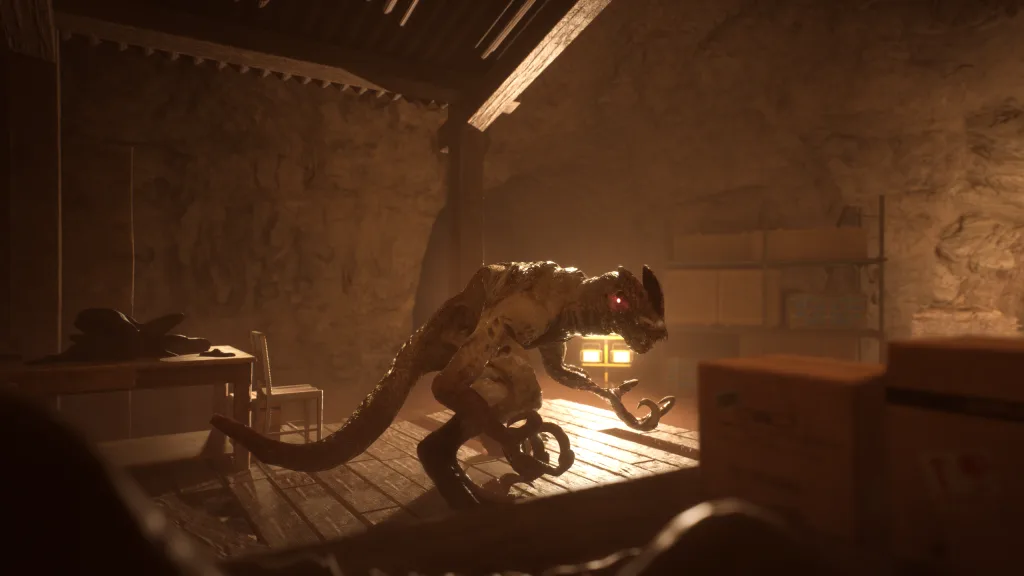
Dennis is the dangerous creature DJ calls his dinosaur friend. DJ is Dalton Jr., the missing child; they are separate characters. Their relationship is real, but it is not safe: Dennis threatens Jordan, takes DJ’s treasured fossil and ultimately tries to prevent their escape.
Terrible Lizards Dennis: the short answer
In Terrible Lizards, Dennis is not another name for DJ. The child speaks about Dennis, asks Jordan to retrieve an object from his lair and later addresses the creature directly. Those exchanges establish two distinct participants, even if a player has missed the earlier letters and diary entries.
The confusion is part of the story’s reveal. Adults initially explain Dennis as an imaginary friend, while DJ treats the relationship as part of his ordinary life. Later encounters make that reassuring adult explanation untenable. The useful question is no longer whether DJ invented a name, but what the friendship actually demands of him.
References: DJ and the tooth fossil — 3:06:40 ↗
Why Dalton dismissed the friendship
Early in Terrible Lizards, Dennis appears in family correspondence before Jordan has the context to understand the name. Dalton complains about DJ’s attachment to the supposed friend. His later recorded message admits that the family was wrong about Dennis, changing the meaning of those earlier complaints.
This matters because a warning can arrive disguised as a family argument. Dalton’s irritation does not establish that DJ is lying; it shows what Dalton believes at that moment. Read the later recording as a correction to his understanding, rather than treating both statements as equally accurate descriptions of the creature.
The relevant comparison in TheGamingBeaver’s supplied transcript is the early letter around 5:25–6:09 and Dalton’s recording around 53:36–54:11. Those two moments give the Terrible Lizards Dennis reveal a concrete sequence: dismissal first, recognition later.
References: TheGamingBeaver — full-game recording ↗
DJ’s diary and the sick friend
The Terrible Lizards Dennis clues in DJ’s writing describe a child who wants company and looks forward to his friend’s visits. His entries also describe Dennis being sick and black material around him. DJ responds with concern, approaching the problem as someone trying to care for a friend.
The diary supplies DJ’s observations, not a laboratory explanation. In Terrible Lizards, Dennis being associated with black material does not by itself establish how he was created, whether he began as a particular person or exactly what is happening to his body. A frightened child’s account can be sincere without answering those questions.
Interpretation: the diary makes the friendship emotionally understandable before its danger becomes unavoidable. DJ’s attachment and loneliness help explain why a simple instruction to leave is not enough. That is a reading of the relationship, not a diagnosis of the child.
References: DJ’s diary — recording at 1:26:00 ↗
The fossil Dennis takes from DJ
The clearest Terrible Lizards Dennis exchange comes when Jordan reaches DJ underground. Around 3:07:03, DJ says Dennis will find and take him again; when Jordan asks about his dinosaur friend, DJ confirms the connection. DJ then asks for an Allosaurus tooth fossil from his first dig with his mother.
Dennis has taken the fossil to his lair. Its importance is personal: it connects DJ to a memory with his mother, so it is more than a generic fetch item. In Terrible Lizards, Dennis’s habit of taking things also complicates the idea of a harmless friendship. The person DJ trusts is keeping something precious from him.
Jordan retrieves the fossil and returns. Around 3:14:15, DJ identifies Jordan as his new friend and tries to stop Dennis hurting him. The walkthrough covers the route and interactions; this Terrible Lizards Dennis guide focuses on what the exchange establishes about the characters.
References: DJ and the tooth fossil — 3:06:40 ↗ · DJ intervenes — 3:14:08 ↗
Why Dennis threatens Jordan
At the underground camp, DJ explains that Dennis dislikes anyone other than him. In Terrible Lizards, Dennis’s hostility toward Jordan is therefore not just the player’s interpretation of a chase: the child directly describes that exclusionary relationship. DJ is relieved that Jordan escaped and feared that Dennis would catch him.
Interpretation: Dennis behaves possessively. DJ can appeal to him, but the continuing attacks show why that should not be described as reliable control. Calling the creature a friend does not make Jordan safe, and DJ’s efforts to intervene do not establish a supernatural ability to command it.
The Terrible Lizards Dennis scenes also resist a simple protector label. DJ says he has been taken away, and later rejects the relationship for that reason. Whatever attachment Dennis shows, the story gives the child a clear reason to want to leave.
References: DJ describes Dennis — 3:20:21 ↗ · DJ rejects the friendship — 3:43:57–3:45:19 ↗
Terrible Lizards Dennis ending: DJ chooses to leave
Near the elevator, DJ explains that a friend should not take someone away from home without asking. He agrees to leave with Jordan. When Dennis returns during the ascent, DJ tells him their friendship is over and that they are going home.
In the Terrible Lizards Dennis finale, that choice does not immediately remove the threat. Jordan must catch up to the elevator after the escape is disrupted, then finish the climb with DJ. The final surface scene brings them to Stella’s car. DJ’s decision matters because it replaces waiting for Dennis with trusting someone who comes back to help him.
Does the Terrible Lizards Dennis ending prove the creature is permanently dead? The evidence used here does not establish that. The escape succeeds, but a successful escape and a definitive statement about a monster’s ultimate fate are different conclusions. We do not add a confirmed death where the story leaves uncertainty.
References: DJ rejects the friendship — 3:43:57–3:45:19 ↗ · Surface escape — 3:47:35–3:49:54 ↗
Confirmed evidence and unanswered questions
For Terrible Lizards Dennis theories, keep the claim no broader than the evidence. The developer’s Dilophosaurus–human Hybrid design is a separate piece of information; it does not identify a specific human who became Dennis. See the creature guide for the design discussion and the plot guide for Project Pilgrim.
| Supported by the story | What it does not establish |
|---|---|
| DJ and Dennis are distinct characters | Dennis is DJ in another form |
| DJ calls Dennis his dinosaur friend | DJ can reliably control his actions |
| Dennis took the tooth fossil | A complete explanation of his motives |
| DJ rejects the friendship and leaves | Dennis’s permanent death |
| Black material appears in the clues | A confirmed human identity or infection diagnosis |
References: WDR Studios — developer Q&A and narrative devlog ↗ · DJ and the tooth fossil — 3:06:40 ↗ · DJ rejects the friendship — 3:43:57–3:45:19 ↗
Questions & answers
Is Dennis real in Terrible Lizards?
Yes. In Terrible Lizards, Dennis is encountered as a separate threat, and DJ directly addresses him. The early imaginary-friend explanation is not the story’s final answer.
Are Dennis and DJ the same character?
No. In Terrible Lizards, Dennis is DJ’s dinosaur friend; DJ is the child Jordan is trying to bring home.
Is the Terrible Lizards Dennis quest about a plush toy?
No. DJ asks for an Allosaurus tooth fossil associated with a dig with his mother. That is the required story item taken to the lair.
Does Terrible Lizards confirm Dennis was Elena?
The sources used here do not confirm that identity. The Terrible Lizards Dennis clues support a relationship with DJ, not a proven transformation from a named family member.
Sources & references
- TheGamingBeaver — full-game recording ↗
- WDR Studios — developer Q&A and narrative devlog ↗
- DJ’s diary — recording at 1:26:00 ↗
- DJ and the tooth fossil — 3:06:40 ↗
- DJ intervenes — 3:14:08 ↗
- DJ describes Dennis — 3:20:21 ↗
- DJ rejects the friendship — 3:43:57–3:45:19 ↗
- Surface escape — 3:47:35–3:49:54 ↗
Character analysis draws on the supplied video transcripts and the linked full-game recording. Timestamps identify the relevant dialogue. Commentary by the player is separated from dialogue spoken by game characters; interpretations below are editorial readings, not confirmed lore.
Report a correction ↗